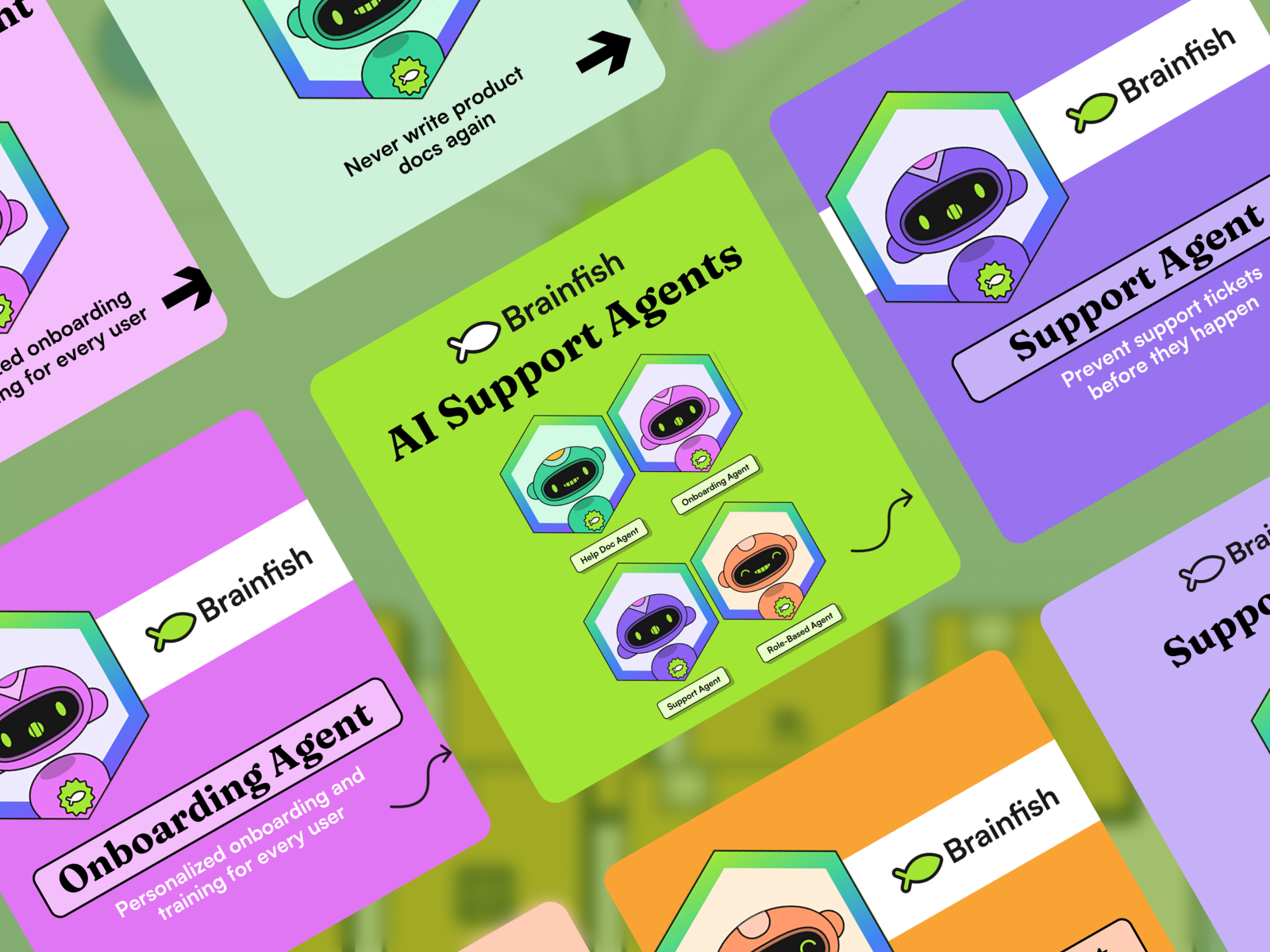
For enterprise SaaS companies, the challenge is rarely just “getting clicks”; it is bridging the gap between ad platform metrics and actual revenue. Brainfish, a sophisticated AI help desk platform, faced a critical disconnect. Aggressive ad spend was driving traffic, but acquisition costs were unsustainable, and data discrepancies obscured true ROI.
VisualFizz partnered with Brainfish to execute a “Revenue-First” restructure. By prioritizing CRM data integrity over vanity metrics and pivoting social strategy from promotion to education, we turned a struggling account into a scalable engine.
The Challenge: High Costs and Opaque Data
By late 2025, Brainfish was navigating a complex market environment. As an AI solution targeting CTOs, CIOs, and Knowledge Managers, the sales cycle is long and non-linear. The marketing team faced two compounding issues that kept them from scaling:
- The Attribution Disconnect The Google Ads dashboard reported conversions that were not materializing in the company’s CRM (HubSpot). This discrepancy created a feedback loop where algorithmic bidding strategies were optimizing for low-quality signals rather than verified sales pipeline. In October, this inefficiency peaked with a CPA hovering near $1,000, a cost that threatened the channel’s viability.
- B2B Creative Fatigue On social channels, standard video and static imagery were suffering from rapid fatigue. The target audience, technical decision-makers, was seeing the ads but engaging superficially. The brand needed a way to deepen engagement and educate prospects on their “fractal AI” differentiator without forcing them off-platform prematurely.
The Strategy: A Data-Led Turnaround
VisualFizz developed a multi-phase turnaround plan that prioritized fiscal discipline and data accuracy. We treated Google Ads, LinkedIn, and Reddit not as silos, but as a unified ecosystem designed to capture and nurture high-intent demand.
Phase 1: Establishing a Single Source of Truth
Before we could scale, we had to stop the bleeding. We moved away from relying solely on pixel data and established HubSpot as the primary source of truth for conversion validation.
- The Hard Decision: In October, data analysis revealed that Performance Max (PMax) campaigns were consuming budget on unverified leads. We made the strategic decision to cut the budget by roughly 45% and eventually pause the campaign.
- The Fix: We implemented strict anti-spam measures (reCAPTCHA) and corrected form tracking logic. This ensured that when we turned the spend back on, the algorithms were only fed “clean” data.
Phase 2: The “Education-First” Social Pivot
We recognized that Brainfish’s target audience does not impulse buy; they research. We pivoted the LinkedIn strategy to focus on Document Ads, a format that allows users to consume technical insights directly in the feed.
- In-Feed Education: Instead of forcing clicks to a landing page immediately, we provided value upfront. This approach drove over 11,000 clicks at a $0.12 CPC, building massive retargeting pools of educated buyers.
- Direct Access: For the highest-value prospects (CTOs/CIOs), we utilized InMail campaigns to bypass the noise of the feed, generating leads at roughly $107. This was a justified cost for high-value enterprise conversations.
Phase 3: Algorithmic Calibration & Mobile Optimization
Once data tracking was resolved in November, we reactivated Performance Max. With clean data inputs, the algorithm began to perform as intended. Simultaneously, our analysis revealed that 96.7% of conversions were occurring on mobile devices, prompting us to optimize the mobile user journey to reduce friction for busy executives on the go.


The Results: Validated Growth
The strategic restructure delivered immediate, quantifiable improvements in efficiency and volume throughout our campaign.
Rapid Pipeline Expansion
By fixing the tracking and focusing on high-intent audiences, we achieved significant month-over-month growth.
- Verified Volume: Demo form submissions jumped massively, but more importantly, the leads were more qualified and more ready to make the purchase.
- HubSpot Validation: Unlike previous months, these leads were verified in the CRM, ensuring marketing spend was actually filling the sales pipeline.
Drastic Improvements in Efficiency
Through aggressive budget reallocation and the removal of wasteful spend, we proved that lower spend can yield better results if the strategy is sound.
- CPA Reduction: The Cost Per Acquisition plummeted by 79% ($963.92 to $202.54).
- Smart Automation: Within a few months, Performance Max drove 97% of paid search conversions at a stable CPA of $123.32, validating our hypothesis that automated bidding works when data integrity is maintained.
Market Penetration & Engagement
Our revised social strategy achieved engagement metrics that far exceeded B2B norms.
- Unmatched CTR: LinkedIn campaigns achieved a 4.24% Click-Through Rate, shattering the typical B2B benchmark of ~0.5%.
- Traffic Scale: We drove 12,912 qualified B2B clicks to the site in a single month, primarily through high-value Document and Carousel placements.
- Efficient Awareness: By utilizing Reddit for top-of-funnel air cover, we secured 45,000+ impressions at a $7.83 CPM, ensuring broad visibility while preserving the LinkedIn budget for conversion.
Conclusion
The Brainfish engagement underscores a critical reality for marketing leadership: in an era of AI-driven advertising, human oversight is the ultimate differentiator. By refusing to accept discrepancies between ad platforms and the CRM, VisualFizz transformed a leaky budget into a precise, scalable revenue engine.